When the Trick Breaks: The Strange Magic of Watching Illusions Fall Apart
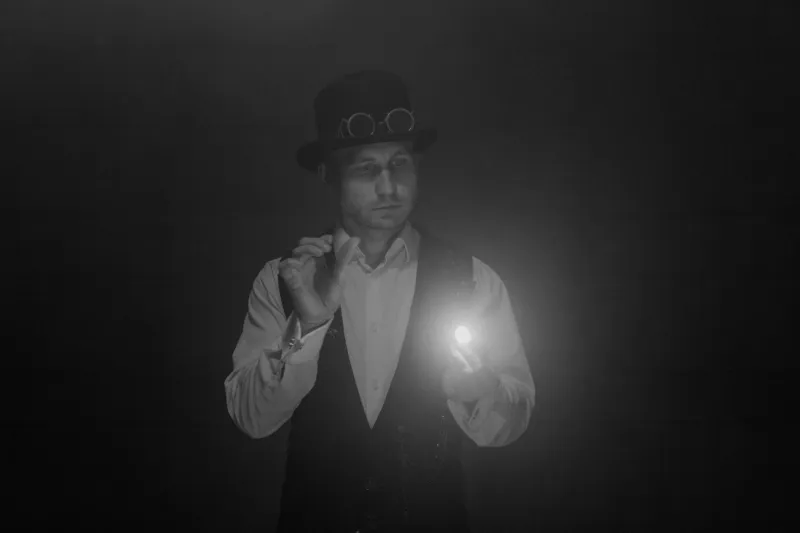
Picture this: a performer in a tuxedo is midway through an elaborate escape sequence. The chains are real, the tank is filling with water, and the audience is leaning forward in their seats. Then — nothing. The assistant fumbles with the lock. The clock ticks past the safe threshold. Someone in the third row audibly gasps.
And somehow, in that moment of visible panic, the crowd is more riveted than they've ever been.
There's a peculiar alchemy that happens when magic doesn't go according to plan. It's uncomfortable, it's electric, and it's almost impossible to look away from. If you've ever wondered why botched illusions can end up being the most talked-about moments of a performance, you're not alone — and the answer says a lot about how our brains process risk, vulnerability, and the unexpected.
The Illusion of Perfection — And Why We're Secretly Rooting Against It
Most magic acts are engineered to feel seamless. The patter is rehearsed, the lighting is calibrated, the misdirection is airtight. Audiences know, on some level, that they're watching a carefully constructed performance — and yet they still want to be fooled. That's the paradox at the heart of stage magic.
But here's the thing: perfection can be alienating. When everything goes exactly right, there's a certain emotional distance. The performer seems almost superhuman. The audience claps, they're impressed, and they move on.
When something breaks? That distance collapses instantly.
Suddenly the magician isn't a flawless illusionist — they're a person, visibly improvising, sweating under the lights, trying to hold the whole thing together with sheer force of will. And that is deeply compelling to watch.
Psychologists call this the "pratfall effect." Research has shown that a competent person who makes a visible mistake is often perceived as more likable and relatable than one who never stumbles. Apply that to live performance, and you've got a recipe for accidental charisma.
Famous Fumbles That Became Folklore
Magic history is full of moments where things went sideways in ways nobody planned — and audiences ended up loving it.
David Blaine has built part of his mystique around endurance stunts that flirt with genuine failure. During his "Above the Below" stunt in London, where he suspended himself in a glass box for 44 days without food, the spectacle of watching someone visibly struggle became more captivating than any traditional trick could have been. The "failure" was the performance.
Then there's the infamous story of a famous dove act — a staple of Las Vegas-style magic — where the bird simply refused to cooperate, flying directly into the audience rather than disappearing into the performer's jacket. The magician, a seasoned professional, ad-libbed his way through it with such quick wit that the audience gave him a standing ovation. Nobody remembered the original trick. They remembered the recovery.
Even Penn & Teller, who have built an entire career around deconstructing magic and showing audiences how tricks work, have had moments where a bit goes unexpectedly off-script. Their genius is in making it look like the chaos was always part of the plan — which, sometimes, it actually was.
The Psychology of the Exposed Trick
What happens in an audience's brain when a trick gets exposed mid-performance? It's surprisingly complicated.
First, there's a jolt of cognitive dissonance. The audience has been primed to believe in the illusion, and suddenly the curtain is pulled back. For a split second, people don't know how to feel — should they be disappointed? Embarrassed for the performer? Delighted that they finally "caught" something?
That ambiguity is actually part of what makes the moment so gripping. Our brains hate unresolved tension, and we instinctively stay locked in to see how it gets resolved.
Second, there's the empathy factor. Humans are wired for social connection, and watching someone navigate a high-stakes public failure triggers our mirror neurons hard. We feel the performer's stress. We want them to recover. That emotional investment is often stronger than anything a perfectly executed illusion could generate.
Finally, there's the novelty response. Our brains are prediction machines, and magic is already a space where we expect the unexpected. When something goes wrong in a way that even breaks those expectations, the novelty hit is enormous. It's genuinely surprising in a world where very little surprises us anymore.
How Professionals Turn Disaster Into a Standing Ovation
The best performers in the business have a toolkit for exactly these situations — and watching a skilled magician recover from a mishap is its own kind of art form.
Humor is the most powerful weapon. A well-timed joke that acknowledges the failure without dwelling on it can completely reset the audience's emotional state. It signals confidence: I'm not rattled. We're all in on this together.
Misdirection — magic's most fundamental tool — gets repurposed for damage control. A great performer can redirect attention so smoothly that half the audience isn't even sure what they saw. Did the trick fail, or was that the trick?
And then there's the bold pivot: abandoning the failed bit entirely and launching into something even more impressive. It's a high-risk move, but when it lands, it reframes the whole sequence. The fumble becomes a setup. The audience feels like they've been taken on a ride.
What all of these techniques share is a kind of radical presence — the ability to stay fully in the moment, read the room, and respond in real time. That's not something you can fully rehearse. It's a skill that only comes from years of performing, failing, and learning.
Why We Keep Watching
There's a reason that blooper reels from magic shows rack up millions of views online, while flawless performances sometimes barely make a dent. We are drawn to the human element — to the crack in the facade that reminds us there's a real person behind the curtain.
Magic, at its best, is about wonder. But wonder doesn't only come from perfection. Sometimes it comes from watching someone stare down an impossible situation — a trick gone wrong, an audience holding its breath, a performer with nowhere to hide — and somehow, somehow, pull it back from the edge.
That's not just entertainment. That's the realest kind of magic there is.
So next time you're at a show and something goes sideways, don't look away. You might be watching the most memorable moment of the night.