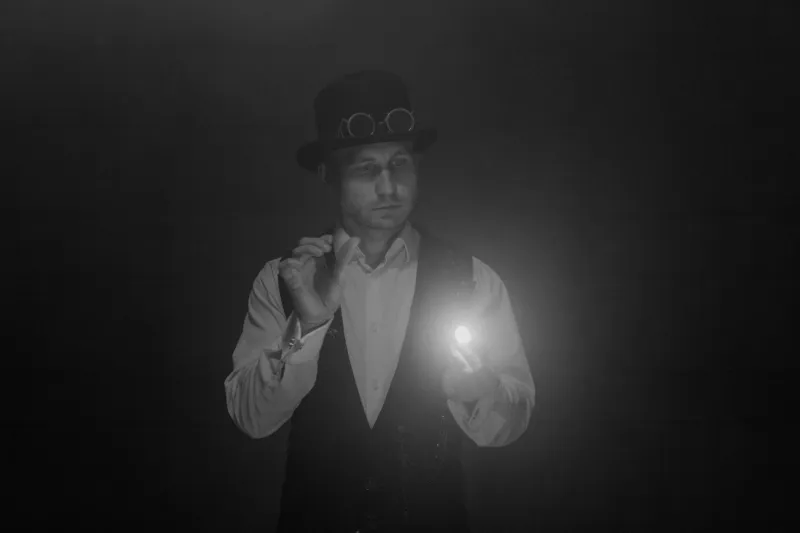
The Night Magic Grew Up: How One Daring Illusion Turned a Carnival Act into High Art
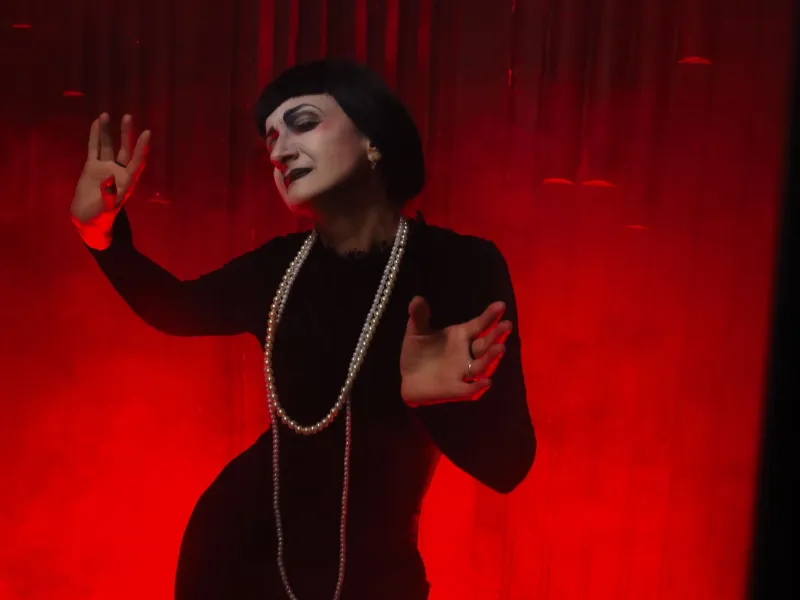
For most of the 19th century, magic was entertainment for the masses in the least flattering sense of the phrase. You'd find conjurers wedged between bearded ladies and fire-eaters at traveling fairs, performing quick-draw card tricks for distracted crowds chewing on funnel cake. Nobody was writing think-pieces about it. Nobody was calling it art. It was a sideshow — literally.
Then came Robert-Houdin. And then, building on his foundation, came Harry Kellar. And eventually, in the early 20th century, came the moment that genuinely changed the game: the popularization of large-scale stage illusion as theatrical spectacle, crystallized most powerfully in Harry Houdini's full-evening escape and illusion shows.
But if we want to pinpoint the single concept that cracked open the cultural ceiling, we need to talk about the Sawing a Woman in Half illusion — specifically, P.T. Selbit's 1921 London debut and its almost immediate American explosion — and why that one act did more for magic's reputation than a hundred rabbit-from-hat routines ever could.
Before the Saw: What Magic Actually Looked Like
To appreciate the shift, you have to picture what a magic show felt like before large-scale theatrical illusions took over. Parlor magic was intimate and clever, sure. Stage conjurers like Alexander Herrmann and Howard Thurston were drawing real crowds by the late 1800s. But the perception of magic as a legitimate performing art — something worthy of a proper theater ticket, a dressed-up night out, a review in a serious newspaper — was still pretty shaky.
Magic was novelty. It was trickery. It was fun, but it wasn't meaningful. Critics weren't losing sleep over it. Cultural commentators weren't dissecting it. It existed in a weird limbo between children's entertainment and working-class spectacle.
That was about to change dramatically.
The Illusion That Broke the Internet (Before the Internet)
When Percy Thomas Tibbles — performing under the name P.T. Selbit — debuted Sawing Through a Woman at the Finsbury Park Empire in London in January 1921, the reaction was something close to mass hysteria. The concept was almost offensively simple in description: a woman climbs into a wooden box, the box is sealed, and then a handsaw cuts straight through the middle of it. She emerges unharmed.
On paper, that sounds like a carnival stunt. In practice, it was theatrical genius.
Selbit understood something his predecessors hadn't fully leveraged: drama. He didn't just perform the illusion — he staged it. He built tension. He made audiences genuinely uncomfortable. There were reports of women fainting in the crowd (some staged by Selbit's promoters, but still). He arranged for fake buckets of blood-colored water to be carried out of the theater afterward, just to keep people talking.
The trick crossed the Atlantic almost immediately. American magician Horace Goldin got wind of it, refined the presentation to show the box being separated into two clearly distinct halves, and started performing his own version within months. The race was on, and suddenly every major American theater wanted this act on their stage.
Why This Particular Trick Mattered So Much
Here's what's fascinating about the cultural moment Selbit and Goldin accidentally created together. The sawing illusion wasn't just a better trick — it was a different kind of trick.
For the first time, a magic illusion was built around genuine emotional stakes. Audiences weren't just puzzled; they were viscerally disturbed, then relieved, then exhilarated. That emotional arc — anxiety, wonder, release — is the same one you get from great theater, from a well-crafted thriller, from serious narrative art.
Critics who had never paid much attention to magic suddenly had something to write about. The illusion sparked conversations about stagecraft, about the psychology of fear, about the relationship between performer and audience. Magic wasn't just a puzzle to be solved anymore. It was an experience to be felt.
American audiences in the 1920s were also primed for exactly this kind of spectacle. The decade was hungry for novelty, for glamour, for the extraordinary. Magic stepped into that cultural appetite and finally dressed the part.
The Ripple Effects Are Everywhere
Draw a straight line from Selbit's saw to the Las Vegas residencies of Siegfried & Roy, and it's not even a stretch. The logic is identical: take an impossible premise, build an emotional landscape around it, and make the audience feel something bigger than mere confusion.
David Copperfield — arguably the most commercially successful magician in American history — has said in interviews that the theatrical experience of magic is always the point. Making the Statue of Liberty disappear on live television in 1983 wasn't just a trick. It was a statement. It was spectacle with cultural weight. That lineage runs directly through the tradition Selbit helped establish.
More recently, performers like Penn & Teller have pushed the art form into intellectual territory, deconstructing the very nature of illusion while still delivering the emotional gut-punch. Shows like The Illusionists have sold out Broadway runs. Magic has headlined primetime network specials for decades.
None of that happens without someone first proving that a magic trick could make an audience feel something rather than just think something.
What It Means for Magic Today
The next time you watch a magician on stage — whether it's a slick Vegas headliner or someone performing close-up at a private event — pay attention to the emotional beats they're building. The pause before the reveal. The audience member chosen to participate. The music swelling at exactly the right moment.
That's all Selbit's legacy, whether the performer knows it or not.
The sawing illusion taught magic that it could borrow from theater, from film, from storytelling — and that audiences would reward it for doing so. It moved the whole art form out of the sideshow tent and into the spotlight where it actually belongs.
And honestly? The trick itself isn't even that complicated by modern standards. You can find explanations all over YouTube. But the idea behind it — that a magic performance should make you feel something real — that's the part that still hasn't been explained away.
That's the part that still works.