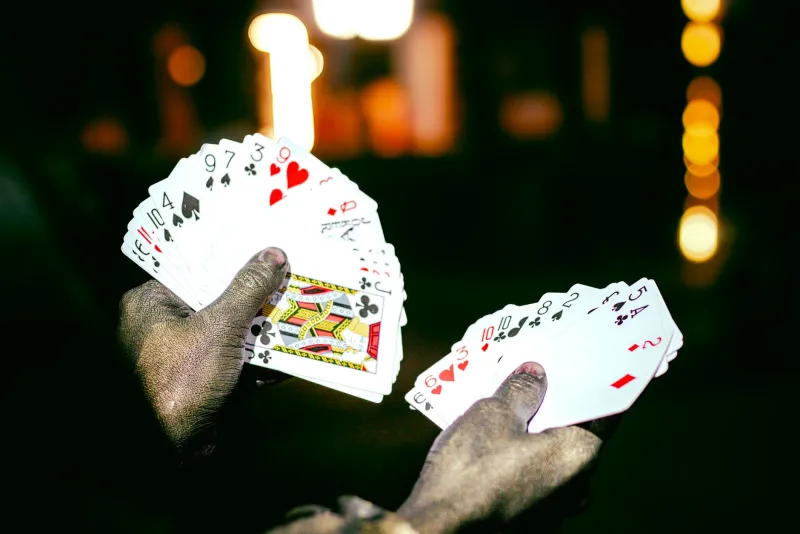
Smoke, Mirrors, and Clever Machinery: The Legendary Props That Built Modern Magic
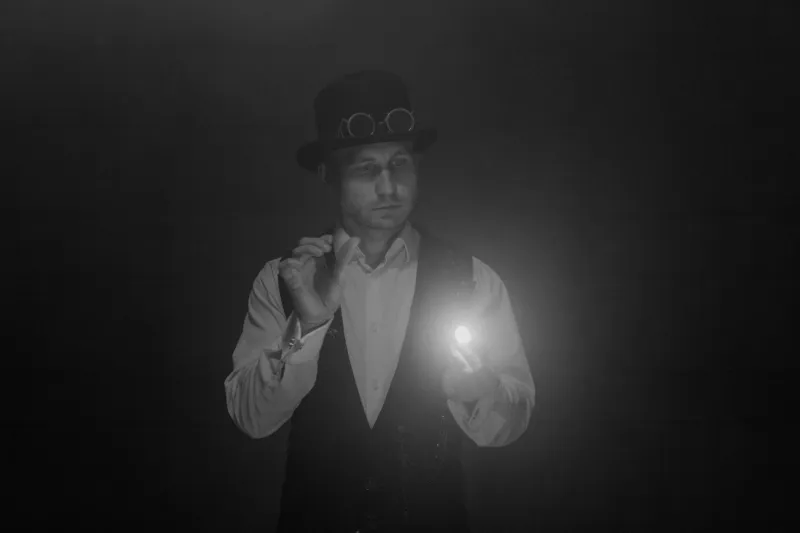
There's a moment in every great magic show — that split second right after the impossible happens — where your brain just sort of... stalls. You blink. You look at your friend. You look back at the stage. Nothing computes. And nine times out of ten, you can thank a very clever object for that feeling.
Magic props don't get nearly enough credit. We talk constantly about the performer, the patter, the showmanship. But the physical tools of the trade? They're quietly doing some of the heaviest lifting in entertainment. Some of them have been fooling audiences for over a century. Others are cutting-edge pieces of engineering that wouldn't look out of place in a robotics lab. All of them share one wild quality: they work on us even when we suspect how they work.
So let's dig in.
Houdini's Escapes: Engineering Anxiety Into Art
Harry Houdini didn't invent the escape act, but he absolutely perfected it — and a huge part of that perfection was in the props themselves. His most famous device, the Chinese Water Torture Cell, was a glass-and-steel tank that locked him upside down, ankles secured, with the tank filled to the brim with water. Audiences would watch through the glass as his assistants stood by with axes, ready to shatter it if he didn't surface in time.
What made this prop so devastatingly effective wasn't just the danger — it was the transparency. Literally. You could see him in there. There was nowhere for a fake to hide. Houdini understood something essential: the more a prop seems to eliminate the possibility of trickery, the more powerful the illusion becomes. The cell was engineered with a hidden release mechanism built into the ankle stocks, but the audience never thought to look there because the glass walls demanded all their attention.
This misdirection-through-design principle is still foundational to prop-making today. You lead the eye with the obvious, and the secret lives somewhere the eye never wanders.
The Sawing Illusion: A Box That Changed Everything
P.T. Selbit debuted the "sawing a woman in half" illusion in London in 1921, and American audiences went absolutely wild for it when it crossed the Atlantic. The basic prop — a long rectangular box, a saw, and a very calm assistant — seems almost quaint now. But the engineering behind early versions of this trick was genuinely innovative for its time.
The earliest iterations used a combination of body positioning and cleverly constructed box compartments to create the visual separation. Later versions evolved to use a box with a false bottom shelf, allowing the assistant's legs to slide into a hidden extension while a pair of fake feet dangled out the other end. The key insight was that audiences wanted to believe the box was exactly what it appeared to be — a simple wooden crate. That assumption did most of the work.
Modern versions have gotten considerably more theatrical. Some contemporary magicians use metal boxes with pneumatic components, allowing for real-time separation visible from multiple angles. The core deception, though, still relies on the audience's instinct to trust what looks simple.
The Linking Rings: Ancient, Elegant, Unstoppable
If you want to talk about props that have truly stood the test of time, you have to talk about the Chinese Linking Rings. This trick — solid metal rings that appear to link and unlink freely — dates back at least to the 13th century in China and has been a staple of Western stage magic since the 1800s. It is, by any measure, one of the oldest magic props still in active use.
The secret is in the manufacturing. A standard linking rings set includes rings that are genuinely solid, one ring with a small gap just wide enough for another ring to pass through, and sometimes a pair of rings permanently linked together. The magician's job is to control which rings the audience examines and when, using sleight of hand and presentation to create the impression that all rings are solid all the time.
What's fascinating is that even when people have a general sense of how the trick works, it still baffles them in person. The physical weight and sound of metal rings clicking together carries a psychological authority that digital tricks or camera tricks simply can't replicate. You're holding something real. That realness is the illusion.
The Floating Table and the Age of Mechanical Props
The late 19th and early 20th centuries were a golden age of mechanical magic props — elaborate, clockwork-driven devices built by craftsmen who were essentially the special effects artists of their day. Floating tables, automata that could write or draw, and cabinets full of hidden pulleys and counterweights filled the stages of vaudeville theaters across the US.
One of the most enduring mechanical props from this era is the levitation rig. In its classic form, a rigid hidden support arm — often disguised as part of the stage or a piece of furniture — holds the assistant aloft while the magician passes hoops around them to "prove" there are no wires. The hoop, of course, is designed to bypass the arm through a specific path the audience never quite tracks.
Modern levitation rigs have incorporated everything from carbon fiber supports to motorized platforms, but the basic theatrical logic hasn't changed: convince the audience that the space around the floating person is empty, and their minds will fill in something supernatural.
Why Simple Still Wins
Here's the thing that surprises most people when they start learning about magic prop construction: the most powerful props are often the most straightforward ones. A bent coin. A marked card. A thumb tip — a tiny flesh-colored cap that fits over a magician's thumb and can conceal a small piece of silk or paper — that costs a few dollars and has been fooling people since the 1930s.
Contemporary illusionists consistently point to simplicity as the secret weapon. The more moving parts a prop has, the more that can go wrong, and the more the performer has to manage technically instead of connecting with the audience. The best props disappear into the performance. They become invisible because they're doing exactly what they're supposed to do: keeping your attention somewhere else entirely.
That's the real trick, isn't it? Not the mechanism. Not the engineering. It's the art of making you look the wrong way at exactly the right moment — and a great prop makes that feel completely effortless.
Next time you're watching a show and something makes your jaw drop, take a second to wonder about the object in the magician's hands. There's a good chance it's been refined over decades, maybe centuries, by people who dedicated their lives to the single goal of making you feel that stall, that blink, that beautiful moment of not knowing.
That's where wonder lives. Right inside the thing you're not quite looking at.