Trapped by the Spotlight: How a Magician's Biggest Win Can Become Their Gilded Cage
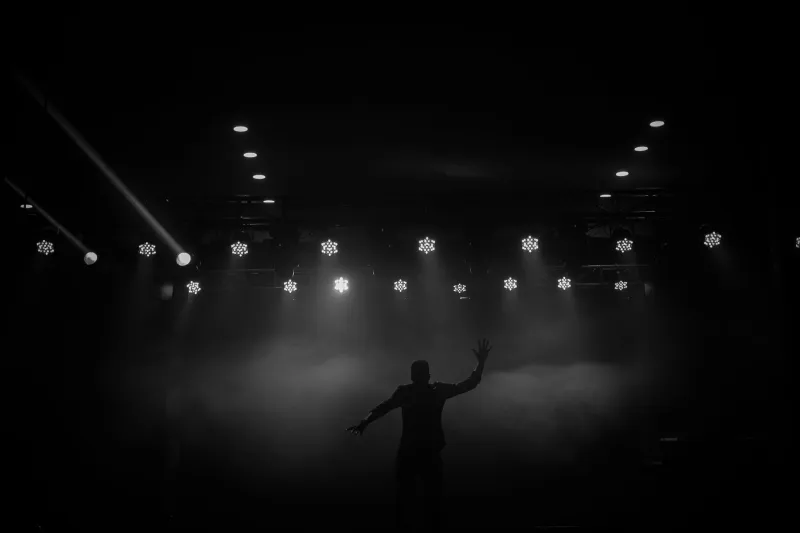
There's a moment every magician chases — the one where the audience collectively loses their minds, where gasps ripple through the room like a wave, where everything clicks into place so perfectly that the performer knows, deep in their bones, that something special just happened. It's the moment careers are built on.
It's also, quietly, the moment the trap is set.
For a surprising number of illusionists, that breakthrough trick — the one that fills theaters, lands TV specials, and gets their name trending — eventually starts to feel less like a gift and more like a contract written in invisible ink. Perform it forever, or risk losing the audience that fell in love with it in the first place.
Welcome to one of magic's least-discussed dilemmas.
The Price of Being Unforgettable
Think about what it actually means to create a signature illusion. You spend months, sometimes years, developing something genuinely original. You road-test it in small venues, tweak the timing, adjust the misdirection, rebuild the prop from scratch when the mechanics don't feel right. And then, one night, it lands perfectly — and suddenly, that trick is you.
Audiences don't just want to see your show. They want to see that trick. Promoters mention it in press releases. Late-night bookers request it specifically. Your Wikipedia page leads with it. The illusion you created becomes the lens through which everything else you do gets filtered.
For performers who are still excited about that signature piece, this is fine — even thrilling. But creative people rarely stand still. The same restless imagination that invented the trick in the first place keeps spinning, generating new ideas, new concepts, new directions. And that's where the tension starts to simmer.
When Evolution Feels Like Betrayal
Here's the uncomfortable truth that a lot of magicians will tell you off the record: their most devoted fans are sometimes their biggest creative obstacle.
Audiences form deep emotional attachments to the tricks that first amazed them. There's nothing cynical about that — it's actually a beautiful thing. Magic, at its best, creates genuine wonder, and people want to revisit that feeling. But when a performer tries to pivot, to introduce something radically different, those same devoted fans can react with confusion, disappointment, or outright rejection.
It's a dynamic that shows up across entertainment. Rock bands get booed for going acoustic. Comedians get criticized for getting too serious. But in magic, it cuts especially deep because the art form is already so reliant on trust. An audience has to believe in you before they can be fooled by you. When you change your identity, that trust can wobble in ways that feel almost personal.
Some illusionists respond by quietly folding their new experiments into the back half of their shows, keeping the signature piece up front as a kind of peace offering. Others push through the resistance and accept that they'll lose part of their audience in the process. A few just stop touring altogether rather than keep performing something that no longer reflects who they are as artists.
None of those options are easy.
The Commercial Machine Doesn't Help
The business side of magic makes this harder, not easier. Booking agents, production companies, and venue managers are working with the currency of recognizability. They want to sell tickets, and tickets are easier to sell when the marketing copy can lead with something audiences already know and love.
So the incentives push constantly in one direction: do the thing that worked before. Do it again. Do it in a bigger venue. Do it on a bigger stage. The financial rewards for staying put can be genuinely substantial, which makes the creative cost of breaking free feel even steeper.
This is particularly acute in the US market, where entertainment tends to be packaged and branded with real precision. American audiences have tremendous enthusiasm for magic — we're a culture that has always loved spectacle — but that enthusiasm often gets channeled toward known quantities. A Las Vegas residency built around a signature illusion is a golden opportunity. A Las Vegas residency built around "something totally new and different" is a much harder pitch.
The Rare Artists Who Find a Way Through
Not every magician gets swallowed by this dilemma. Some find ways to evolve without abandoning what made them famous — threading the needle between honoring their signature and pushing into new creative territory.
The key, from what performers have described in interviews over the years, seems to be reframing the relationship between the trick and the performer. Rather than treating the signature illusion as a fixed monument, the most adaptable magicians find ways to let it grow — changing the presentation, the context, the emotional story wrapped around it — so that the trick stays familiar enough to satisfy longtime fans while reflecting a more mature artistic vision.
Others lean into transparency about the tension itself, talking openly with audiences about their creative evolution and inviting fans along on the journey rather than just presenting them with a finished product. It's a vulnerable approach, and it doesn't always work, but when it does, it can actually deepen the connection between performer and audience in unexpected ways.
The Trick You Can't Escape — And the One You Might Not Want To
There's a philosophical layer to all of this that's worth sitting with for a second. Magic is an art form built entirely on the gap between what appears to be true and what actually is. The whole enterprise runs on the distance between perception and reality.
And yet, when it comes to their own careers, magicians often find themselves trapped by perception — specifically, the audience's perception of who they are and what they do. The very skill set that lets them manipulate how others see the world can't always be turned inward to reshape how the world sees them.
There's something almost poetic about that. The master of illusion, unable to change the illusion of themselves.
Maybe the real trick — the hardest one, the one that doesn't come with a prop or a secret mechanism — is figuring out how to keep creating from a place of genuine excitement without torching everything that got you to the stage in the first place. Some magicians crack that code. Some never do. And some, honestly, make peace with their gilded cage and decide that performing something they built with their own hands, night after night, to audiences who love it deeply, isn't such a bad life after all.
Wonder, after all, doesn't have an expiration date. Even if the trick is one you've done a thousand times before.