Showing Your Hand: How Some Magicians Are Winning Audiences by Letting Them Behind the Curtain
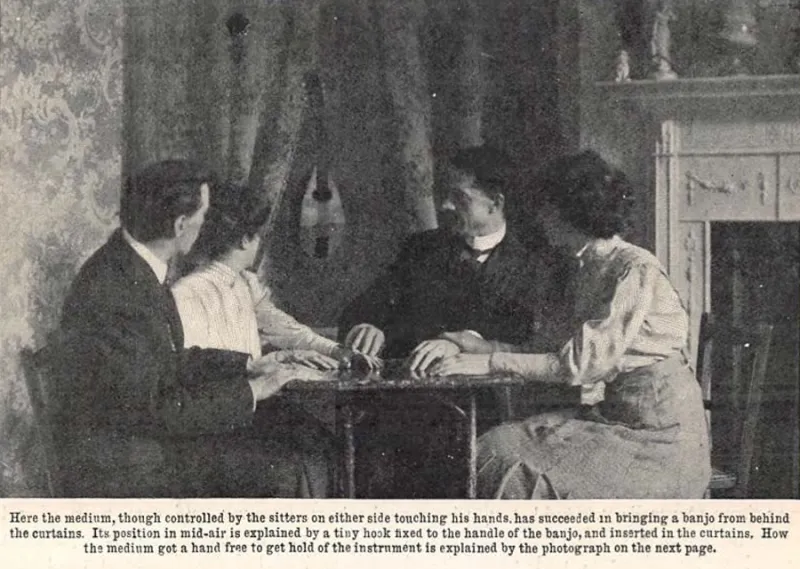
Photo: William Marriott, Public domain, via Wikimedia Commons
For as long as people have been sawing assistants in half and pulling rabbits from hats, the first rule of magic has been ironclad: never reveal the secret. It's practically tattooed on the soul of every performer who's ever stepped onto a stage. Secrets are the currency of the craft. Protect them, and you protect the wonder.
But here's the thing — a growing number of magicians are breaking that rule on purpose, and their audiences love them for it.
This isn't about exposure videos or disgruntled former performers spilling trade secrets on YouTube. This is something more intentional, more artful. It's a deliberate choice to share some of the how, and in doing so, reframe the entire experience of watching magic.
The Secret Wasn't What You Thought It Was
Let's get something straight first. When audiences say they want to know how a trick is done, they're rarely telling the whole truth. What most people actually want is the feeling that they could understand it — not the dry mechanical reality of it.
Ask anyone who's ever Googled a magic trick after a show. The answer is almost always a little deflating. "Oh, it's just a double lift." "Oh, the box has a false bottom." The method, stripped of context, is often anticlimactic. The wonder wasn't living in the secret. It was living in the performance.
Smart magicians have figured this out. And they're using it.
When a performer walks an audience through the bones of a technique — the misdirection, the timing, the psychology — something interesting happens. Instead of destroying the illusion, it raises the stakes. Now the audience knows what's coming and watches with a completely different kind of attention. They're not just spectators anymore. They're participants in a shared act of creative deception.
The "Educated Audience" Effect
Think about how we watch movies after film school, or how a musician listens to a concert differently once they've learned an instrument. Knowledge doesn't dull appreciation — it often sharpens it.
The same logic applies to magic. Performers like Penn & Teller built an entire career on this principle. Their act regularly features moments where the method is partially revealed, yet the performance remains astonishing. Why? Because once you understand the how, the how well becomes breathtaking. The precision required, the nerve, the years of practice — all of it snaps into focus.
Teller, famously the silent half of the duo, once said that the real secret of magic isn't the trick itself. It's the performer's relationship with the audience. Transparency, used wisely, builds that relationship faster than almost anything else.
When Openness Becomes Its Own Kind of Illusion
Here's where it gets genuinely fascinating — and a little meta. Some magicians have mastered the art of appearing transparent without giving away anything substantial at all.
They'll explain a principle, demonstrate a technique, and let the audience feel like insiders. Then they'll perform something that uses a completely different method, and the audience — already primed to think they understand the game — gets fooled on an entirely new level.
It's a magic trick about magic tricks. The reveal becomes the misdirection.
This layered approach requires serious skill and a deep understanding of how people process information. You're not just performing for eyes and ears anymore. You're performing for assumptions. And assumptions, as any good illusionist will tell you, are the easiest things in the world to manipulate.
Building Trust in a Skeptical Era
There's also a cultural dimension to this shift that's worth acknowledging. American audiences in 2024 are more skeptical than ever. We've been marketed to, algorithmically nudged, and outright lied to enough times that a performer who seems to be hiding something can trigger a kind of low-grade defensiveness.
Transparency disarms that reflex.
When a magician steps forward and says, essentially, I'm going to show you how this works and then do it anyway, they're making an implicit promise of respect. They're treating the audience as intelligent adults rather than marks to be fooled. That shift in dynamic changes everything about how people receive a performance.
Comedians figured this out decades ago. The best stand-up acts feel like someone thinking out loud, not reciting rehearsed material — even when every word has been workshopped to perfection. The illusion of candor is its own art form.
Magicians are catching up.
Not Every Secret Should Be Shared
To be fair, this approach isn't a free pass to explain everything. The magicians who pull it off successfully are incredibly deliberate about what they reveal and when.
There's a difference between demystifying a concept and dismantling an experience. Share the philosophy, the psychology, the broad strokes of technique — and you invite the audience in. Start narrating every specific move in real time, and you've turned a performance into a tutorial. Nobody paid to watch a tutorial.
The artistry lies in choosing the right moments. A well-placed explanation before a trick can build anticipation to almost unbearable levels. A brief behind-the-scenes glimpse after a performance can cement a memory that lasts years. But the timing has to be instinctive, earned through knowing your audience and trusting your material.
Wonder Doesn't Need Ignorance to Survive
Maybe the biggest misconception in magic — and in entertainment more broadly — is that wonder requires ignorance. That the moment someone understands something, the magic evaporates.
But watch a child who's just learned how a rainbow works. They don't stop gasping at them. Watch an architect walk through a building they understand structurally. They're often more moved by it, not less.
Understanding can coexist with awe. In fact, for a lot of people, understanding is the pathway to the deepest kind of awe.
The magicians who are leaning into transparency aren't abandoning wonder. They're just finding a new address for it — one that lives not in ignorance, but in admiration. Admiration for the skill, the nerve, the creativity, and the sheer audacity of someone who can make you feel amazed even when you know, roughly, how it's done.
That's not a lesser kind of magic. If anything, it might be the harder kind to pull off.
And honestly? It might be the kind that sticks with you longest.