Copied Before the Curtain Rises: What Happens When Your Best Trick Goes Viral Without You
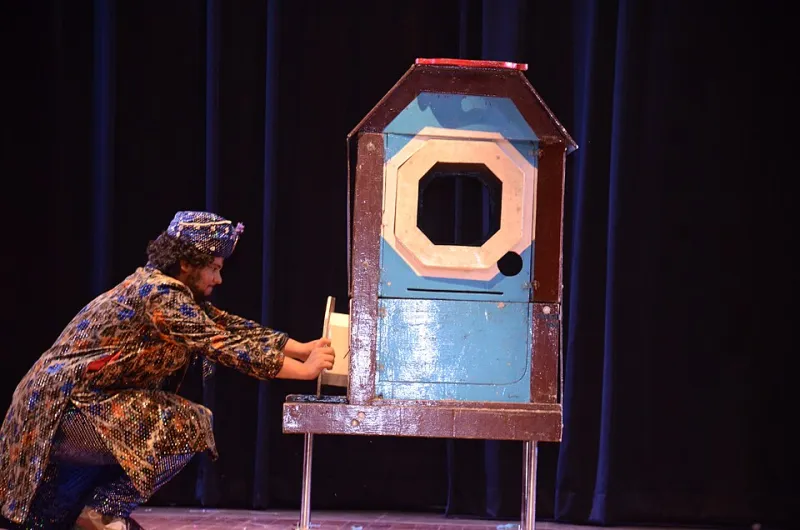
Photo: Eventgeeks, CC BY-SA 4.0, via Wikimedia Commons
Imagine pouring three years of your life into a single moment. You've rehearsed the mechanics ten thousand times in a basement studio. You've burned through prototypes, reworked the angles, retrained your hands until the motion feels like breathing. Then, two weeks before your debut performance at a major venue, someone posts a shaky TikTok of your trick — filmed from the third row at a private showcase — and it hits two million views by Tuesday morning.
That's not a hypothetical. For a growing number of working magicians across the US, it's Tuesday.
The intersection of performance art and social media has created a genuinely strange new battlefield, one where the most valuable thing a magician owns — the secret inside the trick — can be ripped away before a single ticket is sold. And the rules protecting them? Honestly, they're kind of a mess.
The Signature Trick Problem
In magic, your signature illusion is your identity. It's the thing people remember, the reason they buy tickets, the moment that gets quoted at dinner parties. David Copperfield made the Statue of Liberty disappear. Penn & Teller built careers on subverting expectations in ways audiences still argue about decades later. For smaller performers working regional circuits or building YouTube audiences, a single breakthrough illusion can be the difference between a career and a hobby.
The problem is that a trick's power lives almost entirely in its mystery. Once an audience understands the mechanism, the wonder evaporates. And social media — particularly short-form video platforms — is extraordinarily efficient at turning mystery into content.
Deconstruction videos, reaction compilations, and "how it's done" explainers rack up massive engagement. The incentive to expose a trick is baked right into the algorithm. Someone filming your performance and posting it isn't usually trying to destroy you. They're just chasing views. The damage is the same either way.
Real Cases, Real Fallout
The magic community tends to handle these situations quietly — public accusations can backfire, and nobody wants to look paranoid or petty. But talk to working performers long enough and the stories come out.
One Chicago-based close-up magician spent eighteen months developing a card routine that used a custom-printed deck with nearly invisible micro-markings. He performed it twice at private events before a guest posted a slow-motion breakdown on Reddit. Within a month, three other performers had incorporated nearly identical mechanics into their own acts. He rebuilt the routine from scratch — a process he described as "grieving and then getting angry and then just working."
A stage illusionist from Nashville had her escape sequence filmed by an audience member who happened to be standing at exactly the wrong angle. The video didn't fully expose the method, but it narrowed it down enough that online commenters figured out the rest within hours. Her booking inquiries dropped noticeably in the months that followed — audiences who'd already "solved" the trick simply weren't that interested in seeing it live.
These aren't isolated incidents. They're becoming routine.
The Legal Gray Zone Nobody Talks About
Here's the uncomfortable truth about magic and intellectual property: the law is not your friend, and it never really has been.
Tricks themselves — the methods, the mechanisms, the secret moves — are generally not protectable under US copyright law. Copyright covers expression, not ideas or procedures. You can copyright a script, a specific choreography, a written explanation of a method. But the underlying concept of, say, making a coin vanish from one hand and appear in another? That's fair game.
Patents exist in theory. Some magicians have pursued them for specific prop designs or mechanical devices. But patents require public disclosure of the very information you're trying to protect, which creates its own obvious problem. Trade secret law offers some shelter, but it requires demonstrating that you took reasonable steps to keep the information confidential — which is tricky when your "secret" happens in front of hundreds of people every weekend.
The Magic Circle and the Society of American Magicians have their own ethical codes prohibiting the exposure of methods. Those codes carry weight within the community. Outside it? Exactly zero legal force.
So when a non-magician posts your method online, your options are limited. You can send a DMCA takedown for the video itself if you can claim copyright in the performance. You can appeal to platform community standards. You can hope the algorithm buries it. Or you can start over.
How Performers Are Fighting Back
The most interesting response to this problem isn't legal — it's creative.
Some magicians have started deliberately accelerating their own release cycle. Instead of sitting on a signature trick for years, they're debuting it, filming their own polished version, and flooding the internet with the "official" presentation before anyone else can get there first. It's a counterintuitive strategy: control the narrative by owning the virality.
Others are leaning harder into performance elements that simply can't be stolen — the personality, the storytelling, the live energy that a phone camera can't capture. A video might show you what happened, but it can't replicate the feeling of being in the room when it happened. That experiential gap is where a lot of smart performers are now investing.
A smaller group has gone the opposite direction entirely, building their brand around transparency. They explain their methods openly, betting that audiences will still pay to see a skilled performer execute something difficult even when they understand how it works. It's a genuinely fascinating philosophical shift — trading mystery for mastery.
And then there are the performers quietly developing tricks so technically demanding that even if the method gets out, very few people could actually replicate it. Difficulty as copy protection. It's not foolproof, but it buys time.
What Gets Lost When the Secret Goes
There's something worth sitting with underneath all the strategy and legal maneuvering. When a trick gets exposed before its time, it's not just a business problem. Something genuinely dies.
Magic works because of a specific kind of agreement between performer and audience — an unspoken contract where you agree to not know, at least for a little while. That willing suspension of understanding is where wonder actually lives. When a TikTok video breaks that agreement before the performance even happens, the audience doesn't just lose the surprise. They lose the experience of being surprised. And that's the part that can't be rebuilt with a new prop or a reworked routine.
The magicians navigating this moment most gracefully aren't just the ones with the best lawyers or the fastest content pipelines. They're the ones who understand that the trick was never really the point. The feeling was. And feelings, at least for now, are still pretty hard to steal.
For anyone building something worth protecting — whether it's an illusion, an idea, or a moment of genuine wonder — maybe that's the most useful trick of all.