Thank You, Sir, You've Just Made My Career: How Hecklers Accidentally Became Magic's Greatest Collaborators
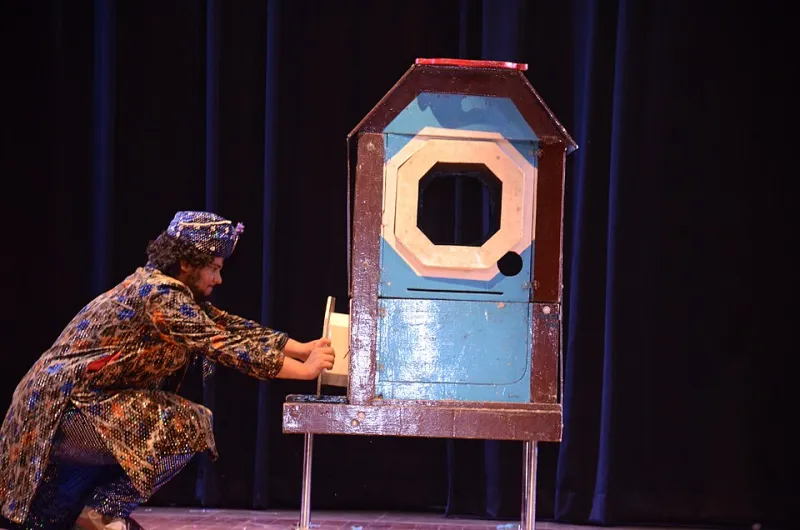
Photo: Eventgeeks, CC BY-SA 4.0, via Wikimedia Commons
There's a moment every working magician knows intimately. The cards are set. The patter is flowing. The audience is right there with you—leaning in, eyes wide, totally hooked. And then someone in the third row decides they're actually the main act.
Maybe they shout out the method. Maybe they grab a prop. Maybe they're just loud and restless and determined to prove to their friends that they're not impressed. Whatever the flavor, the interruption lands like a bucket of cold water. The rhythm breaks. The room shifts. And the magician is suddenly standing in completely uncharted territory.
Here's the thing nobody tells you before you get into this business: that territory? It's where some of the best magic of your life is going to happen.
The Myth of the Perfect Show
Most people assume that a great magic performance is a tightly controlled machine—every beat rehearsed, every reaction anticipated, every variable accounted for. And sure, the preparation is real. Magicians spend hundreds of hours drilling technique, crafting scripts, and stress-testing routines for exactly this reason.
But the performers who've built long, sustainable careers will tell you that the shows they remember most vividly—the ones that generated word-of-mouth, that audiences talked about for years—almost never went according to plan.
Improvisation under pressure isn't just a survival skill in magic. It's where personality lives. It's where the audience stops watching a trick and starts watching a person. And nothing forces that shift faster than a heckler.
When Chaos Becomes the Act
There's a reason stand-up comedians often say their best material came from a rough night at a small club in some city nobody's heard of. The principle translates perfectly to magic. When the script gets torn up in real time, performers discover what they're actually made of—and sometimes they discover they're made of something pretty remarkable.
Consider the magicians who work Vegas residencies or corporate events. These are professionals who perform the same material hundreds of times a year. Without disruption, the work can calcify. The smile gets practiced, the timing gets mechanical, and the whole thing risks becoming a very polished piece of nothing.
Then someone in the audience decides to be difficult—and suddenly the performer is alive again. They're problem-solving. They're reading the room in real time. They're saying things they've never said before, and half of those things are genuinely funny, and the audience can feel the difference between scripted charm and actual wit.
That's the heckler's accidental gift: they force authenticity.
The Recovery as the Illusion
Here's a concept that doesn't get talked about enough in magic circles: sometimes the real trick is the recovery.
When an illusion fails—when a card lands wrong, a prop malfunctions, or an audience member sees something they weren't supposed to see—the magician's instinct is usually to panic, cover, or redirect. The amateur tries to pretend nothing happened. The professional does something more interesting.
They lean into it.
Some of the most talked-about moments in live magic history came from performers who turned a visible mistake into a feature of the show. The audience, already clued in that something went sideways, becomes a co-conspirator. The magician, rather than losing them, pulls them closer. "You saw that, didn't you? Good. Now watch what happens next."
That pivot—from embarrassment to invitation—is itself a kind of illusion. And it's one that can't be rehearsed. It can only be earned through experience, usually the hard kind.
Stories That Stick
Ask any veteran magician about their best show and odds are good the story involves something going wrong. The ring that fell into the audience. The volunteer who genuinely didn't cooperate. The venue that cut the sound at exactly the wrong moment.
These aren't just funny anecdotes. They become the stories that define a performer's identity. They're what gets shared after the show at the bar. They're what the audience member tells their coworker on Monday morning. And in an entertainment landscape where attention is currency, that kind of organic storytelling is priceless.
Magicians who embrace this understand something fundamental about live performance: people don't just want to see something impressive. They want to feel like they were there for something that couldn't have happened anywhere else, at any other time, for any other audience. A perfectly executed show is impressive. A show that went sideways and came back together in real time? That's a story.
Learning to Stop Bracing for Impact
Of course, none of this happens automatically. The ability to transform disruption into gold is a skill—one that takes time, failure, and a genuine willingness to be uncomfortable in public.
Early-career magicians often respond to hecklers with defensiveness or visible anxiety, which only amplifies the disruption. The crowd can smell fear, and a flustered magician gives a difficult audience member exactly what they came for.
The shift happens when a performer stops treating interruptions as threats and starts treating them as material. That mental reframe—from "this is happening to me" to "this is happening for me"—changes everything about how the performer carries themselves. And the audience feels it.
Some magicians have gone as far as building heckler-response lines into their act, not as scripted comebacks but as improvised frameworks. They know the shape of a good response even if they don't know the exact words yet. That preparation gives them confidence, and confidence is what lets the real creativity flow.
The Unscripted Signature
Perhaps the most remarkable outcome of embracing chaos is what it can do for a magician's identity. Some performers have developed entirely new signature bits from moments that started as disasters.
A trick that went wrong in front of a particularly rowdy crowd in a Midwestern comedy club. A volunteer who refused to play along and inadvertently revealed something more interesting than the original illusion. A technical failure that forced the magician to strip the act down to its bare bones—and discover that the bare bones were actually the best part.
These accidental discoveries don't show up in any textbook. They can't be engineered in a rehearsal space. They require a live audience, real pressure, and a performer willing to let go of the plan long enough to find something better.
Magic, at its core, is about wonder. And wonder doesn't always arrive on schedule. Sometimes it shows up drunk, in the third row, and starts talking too loud. The magicians who've figured out how to say "thank you" to that moment—sincerely, not sarcastically—are usually the ones with the longest, most interesting careers.
So the next time you're watching a live show and someone in the crowd decides to make things difficult, pay close attention to what happens next. You might be watching the birth of a legend.